When the Past Shows Up at the Table

The holidays have a way of reaching back into parts of us we haven’t visited in years. Even when we’ve done the work, even when we feel grounded and clear, certain moments can pull at emotional threads we thought were long settled. A particular tone. A familiar family dynamic. A joking comment that isn’t funny to you. A well-meaning but dismissive response about food allergies. Suddenly your body reacts, faster than your mind can catch up. It doesn’t mean you haven’t grown. It doesn’t mean you’re “too sensitive.” It doesn’t mean you’re overreacting. It means your brain remembers.
Why Holiday Emotions Can Feel Bigger Than the Moment
Our brains store emotional memories in layers. Some memories are explicit, the kinds you can tell stories about. But many are implicit. They live in the nervous system rather than in language. They show up as sensations, reactions, and instinctive protective responses. Which means even a small moment in the present can brush against something deeper from the past.
When food allergies are part of your life, either your own or your child’s, the emotional layers multiply. Not because you’re dramatic. Not because you’re anxious. But because food allergies are tied to very real fears: safety, survival, responsibility, trust, and whether others take those things seriously. So when someone questions your precautions… when a family member rolls their eyes at your label-checking… when someone says, “relax, it’s the holidays,” your brain isn’t reacting only to this moment. It may also be reacting to:
• A time you weren’t believed
• A reaction that left your body terrified
• A caregiver who responded poorly
• Moments you felt alone or responsible
• Years of vigilance that never fully turned off
• The emotional labor of managing allergies in environments that aren’t always safe
This is why a small comment or mistake can feel so big. Not because you’re wrong, but because the feeling has more than one source.
Skills for Moving Through Holiday Triggers
“Is this about now… or is it touching something deeper?” This is a powerful question to carry into the holidays. It creates space. It lets your mind catch up with your body. It invites compassion instead of judgment. And it helps you show up as the person you’ve become, not the person you used to have to be. Noticing that a moment feels bigger than the situation is the first step. It means you’re tuned in, reflective, and paying attention to your internal world. But insight alone doesn’t usually calm the nervous system. When old feelings surface during the holidays, especially in the context of food allergies, safety decisions, and family dynamics, your body may need support as much as your mind does.
The following practices aren’t about perfection or performance. They’re about helping you stay connected to yourself in moments that feel overwhelming or emotionally charged. They offer a way to pause, to breathe, and to choose how you want to show up, rather than being pulled into old patterns or protective reactions. These skills are meant for adults managing their own food allergies and for parents navigating the emotional weight of keeping a child safe. Adapt them in the way that feels most supportive to you.
Pause and Name What’s Happening
When a moment catches you off guard (a question about food, a family member making light of precautions, someone dismissing your concerns), your emotional response may hit faster than you expect. Your pulse jumps, your shoulders tighten, or your thoughts race ahead. This is your nervous system remembering. It recognizes something familiar, even if the present situation doesn’t fully match the past. Naming this, quietly, internally, can create just enough space between you and the reaction to soften the intensity.
For adults with allergies, this might sound like: “My body is alert because I’ve lived through moments where safety was uncertain. This reaction makes sense.”
For parents: “My reaction is strong because keeping my child safe has shaped everything about how I move through the world.”
Naming the experience doesn’t magically erase the feeling, but it turns the moment from something overwhelming into something more understandable and manageable. You’re not failing, you’re witnessing your own nervous system trying to protect you.
Give Your Nervous System a Moment to Return to Now
When your body shifts into a heightened state, it’s not responding to the present moment alone, it’s also responding to echoes. To bring yourself back, you need a gentle way to show your brain that it is safe right now. This often starts with something sensory and simple: feeling your feet pressing into the floor, loosening your jaw, taking one slow breath with a longer exhale. These cues signal to your brain that you’re not in danger. You’re here. You’re resourced. You’re not alone.
Look around the room for something neutral or comforting: the texture of a chair, the pattern on a wall, the holiday lights. Tell yourself, softly: “This is now.” "I am okay.” “I can handle this moment.”
People living with food allergies often carry years of vigilance, and their bodies stay prepared for the worst even in safe environments. They may carry the imprint of fear from past reactions or close-calls. Grounding in the present helps you step out of the “old moment” your body remembered and into the reality you’re actually living.
Make Space for Both Parts: The Past and the Present
During holiday gatherings, two parts of you may show up at the same time:
• The adult you are now, equipped, clear, and capable
• A younger part of you who once felt dismissed, scared, responsible, or unseen
Neither part is wrong. Both are telling you something. Instead of pushing away the part that feels younger or more sensitive, imagine gently turning toward it. You might say to yourself: "I know why this feels big. You learned to stay alert for good reasons. I’m here now.” This inner dialogue is not self-indulgent, it’s self-leadership. It shifts you from being flooded by old feelings into holding space for them with steadiness.
Parents often notice this very strongly. The urge to protect, the flash of fear, the anger when someone dismisses the allergy. These reactions live in the nervous system, shaped by experience and responsibility. Giving space to both parts helps you respond from clarity, not from old survival strategies. It's the difference between being swept into a reaction and gently leading yourself through it.
Rehearse Your Boundaries Before the Gathering
Holiday gatherings often feel overwhelming not just because of the moment itself, but because of the anticipation. All the "what ifs" that build pressure before you even arrive. Rehearsing boundaries, and what to say when they are challenged, ahead of time is not rigidity, it’s emotional preparation. It reduces the mental load of deciding what to say in the heat of an activating moment. It gives your nervous system a script it can lean on when you feel pulled into old dynamics.
For adults managing their own allergies, this might sound like:
• “I’m not debating my allergy needs today.”
• “This is what keeps me safe, and I’m sticking with it.”
For parents:
• “I appreciate your concern, but we have a plan and we are following it.”
• “We’re not opening the allergy conversation for debate.”
These statements don’t have to be delivered sharply or defensively. They can be calm, steady, and matter-of-fact. Practicing them beforehand helps your brain stay connected to the “now” version of you, the grounded adult who knows exactly how to care for yourself or your child. This way, when old patterns try to pull you back, you already have a path forward.
Afterward, Recenter Instead of Criticizing Yourself
It’s easy to leave a holiday gathering replaying every moment that felt hard. The mind often turns toward self-criticism:
“Why did that bother me so much?”
“Why did I get emotional?”
“Why can’t I just let things go?”
But these reactions come from a nervous system shaped by years of protecting yourself, or protecting a child you love. Rather than grading yourself, try reflecting with gentleness:
• Where did I show strength today?
• What did I handle differently from past years?
• What does this reaction tell me about the values I’m protecting?
• What do I need to feel supported moving forward?
Growth rarely looks like perfect composure. More often, it looks like noticing sooner, calming faster, speaking up more clearly, or giving yourself space more compassionately than before. Your reactions are not evidence of failing. They’re evidence of caring deeply, and of your nervous system trying to keep you safe. And every time you respond with curiosity and understanding instead of self-judgment, you strengthen the part of you that is growing, anchored, and capable.
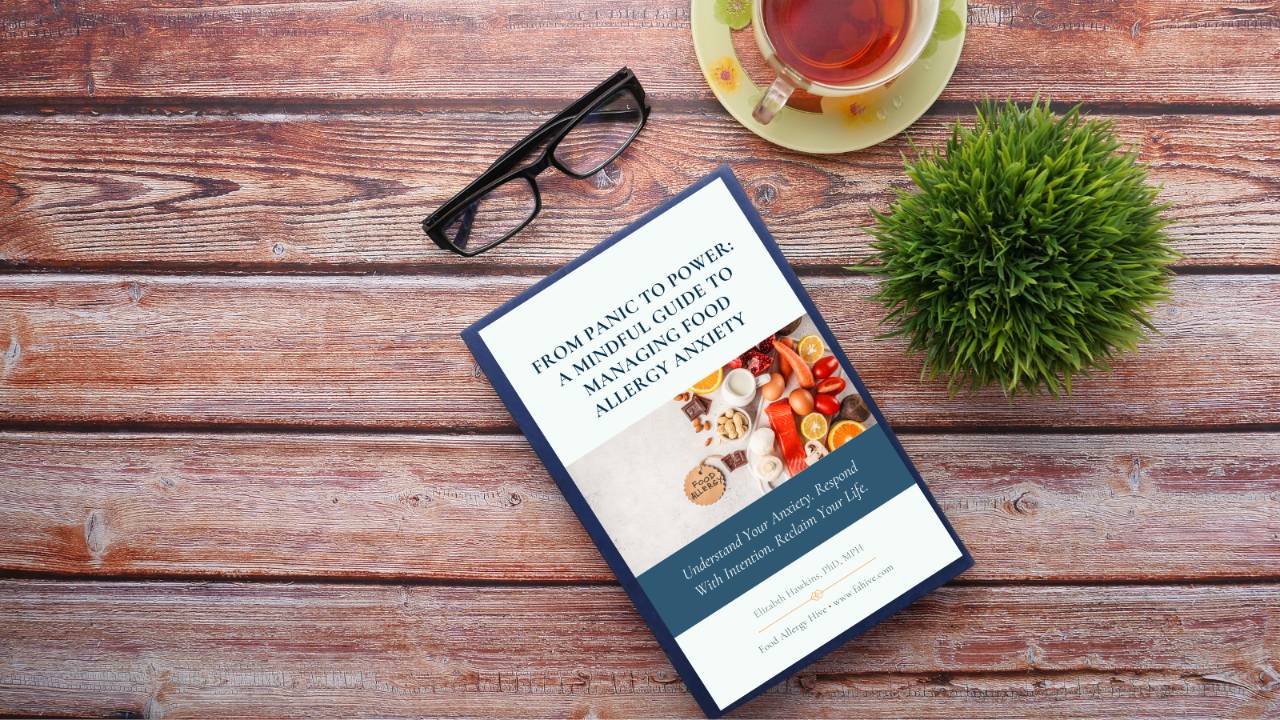
Food Allergy Hive has created a free companion resource to support you this season. The Holiday Reset Guide is a toolkit with grounding practices, in-the-moment regulation skills, and reflection prompts to help you stay connected to who you are now, not who old patterns once required you to be. You can download it from our Resources page and keep it with you as a steady reminder that you can meet the holidays with clarity, compassion, and calm leadership.